Too early to tell whether new law will help horse racing
by: Bob Mercer
Posted: Oct 7, 2026 / 05:02 PM CDT
Updated: Oct 7, 2026 / 05:02 PM CDT
FORT PIERRE, S.D. (KELO) — The manager of South Dakota’s last state-licensed horse racing track talked with KELOLAND News about challenges the industry faces in the state.
Shane Kramme of Fort Pierre helped convince state lawmakers last winter to require that all online betting hubs for horse and dog races must be licensed in South Dakota if they have customers here, regardless of where the hub is based.
The rules to implement the new law took effect on September 30. Kramme said he doesn’t know yet whether that new requirement will translate into more government revenue finding its way to South Dakota’s live-racing industry.
“They’re not going to tell you how many customers they have,” he said. “I don’t know what their economic outlook looks like.” He added, “It’ll be interesting to see how many providers get licensed.”
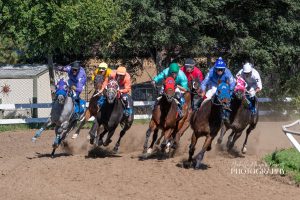
The Fort Pierre-based Verendrye Benevolent Association ran the one day of racing on Saturday, October 3, with 54 horses competing in nine races for $79,500 of purse money.
The South Dakota Gaming Commission tapped two horse-racing funds and provided a total $62,000 as state support for this year’s event. Kramme said nearly $30,000 more came from sponsors in the Fort Pierre and Pierre area.
Horse racing could see more revenue from online hubs
“They’re one of the main reasons we’re here still and kicking,” he said.
The people fighting to keep organized horse racing in South Dakota are battling against a gradual decline. The Park Jefferson track at Jefferson, South Dakota, stopped holding horse races in 1982. The Rapid City track held its last horse races in 1987. The Aberdeen track ended its horse races in 2018.
In 2020, dates of the Fort Pierre races were shifted to the first weekend of October. They had been the first weekend of May. Asked why horse racing no longer holds as much of the public’s attention, Kramme said, “Deadwood gaming and video lottery.”
South Dakota voters amended the state constitution in 1986 to allow a lottery. They amended the state constitution again in 1988 to allow Deadwood gambling. The Legislature legalized video lottery in 1989.
Video lottery players lost approximately $330 million in fiscal 2025, with state government receiving half of that amount, while Deadwood casino gamblers lost $153.6 million, with state and local governments receiving more than $19 million.
Kramme said horse racing also was hurt in 2002, when Bill Janklow, who was governor at the time, convinced state lawmakers to start shifting money from horse-racing funds to other state government purposes. He estimated the total eventually reached $5.85 million.
The revenue came in part from a 4.5% tax charged at off-track betting locations.
“That was crippling for South Dakota. That money was collected specifically for horse racing,” Kramme said.
“It still irks me it was done in the fashion it was done in,” he said.